
The iconic male tiger, admired by thousands of tourists and feared by rivals, reportedly died after a fierce clash in the Khitauli range. Bandhavgarh National Park has lost one of its most recognizable and beloved tigers. Pujari (priest in English) , the majestic male who ruled hearts as much as territories , is believed to have died following a violent territorial clash with D1, another dominant male from the Khitauli range. Tourist guides noticed his sun-salutation poses at water bodies and a priest like calm in the cat, giving him the moniker. For wildlife lovers and regular visitors to Bandhavgarh, the news marks the end of an unforgettable chapter in the park’s rich tiger history. Several WhatsApp groups of tourists, guides, and wildlife enthusiasts have been flooded with tributes to the iconic tiger. While many stories circulating after Pujari’s death may not fully conform to scientific wildlife interpretations, they reflect the immense popularity of the big cat and t...
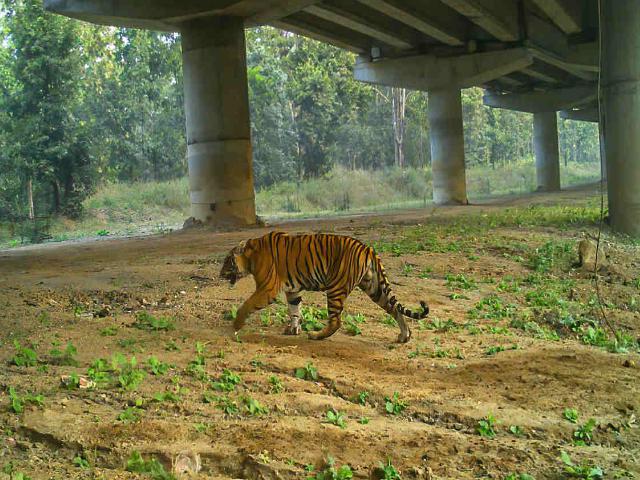
Much- hyped wildlife friendly NH7 passing through the famous Kanha -Pench forest corridor and named after the two famous national parks should have 11.81 kms long under passes to let the wildlife have a safe passage. Instead the National Highways Authority of India (NHA) overlooked the rules and constructed only 4.41 km long underpasses compromising their dimensions. Similarly in NH6, only 2.95 km of mitigation work was done against a schedule 8 kms length. Not everybody knows this truth. Now NHAI seems to be completely violating the Wildlife (Protection) act 1973 while constructing a road patch on NH46 ( Hoshangabad -Betul). This is a functional tiger corridor connecting Melghat and Satpura tiger reserves. Now the connectivity is also as threatened as the tiger itself.
No Lessons Learnt From NH6 Kanha- Pench Corridor
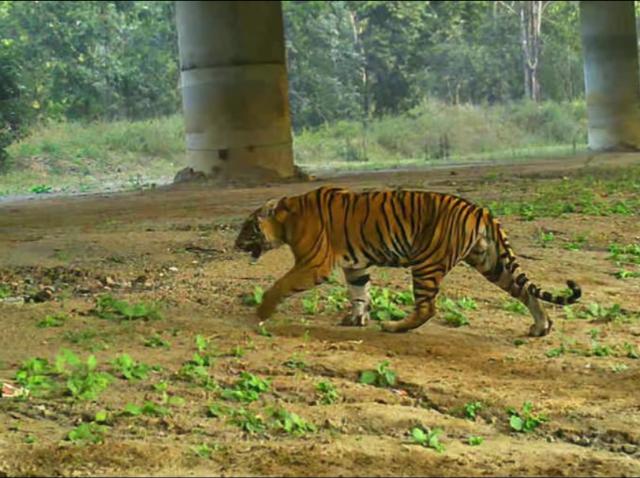
The reduced length of structures in MH6 and NH7 -connecting East with the West and North with the South respectively -for safety of the wildlife could be achieved only after arduous court battles between conservationists and government authorities for close to a decade. The highway expansion was delayed for years. In 2008, the Wild Life Institute of India (WII) approached the apex court for a realignment of the road project. The NHAI refused to agree. Later, the agency also scaled down its own proposals and refused the mitigation plans proposed by WII. The much diluted mitigation measures that we see today on NH7 are the results of many flip –flops ,political interventions and litigations .
Also read: Tiger's Epic Walk Raises Serious Environmental Issues
MP seems to have learnt no lessons from the dispute over wildlife mitigation on Pench-Kanha corridor (NH7) .Now a similar dispute has developed on Gwalior to Betul NH46 where MP forest department also looked the other way undermining the Wildlife (protection ) act as the road construction work goes on to meet the deadline. Officials admitted that the 2012 project should have been referred to the National Board for Wildlife (NBWL) for the mitigation works. But no lessons were learnt from the previous experiences and the NHAI as well as MP forest department - allegedly under immense pressure from politicians -have chose to bypass the Wildlife (Protection) Act, 1972, by not taking the NBWL and NTCA clearances while expanding three corridor stretches — Baretha Ghat, Bhoura (in Betul) and Kesla Ghat (Hoshangabad). Forest department sources also said that the NHAI has expressed inability to construct underpasses because of the topography of the area.
Also read: Avni's killing: Core Issue of Tiger Corridors Lost in Oblivion
The Satpura-Melghat in Central India and Eastern Ghats is among the 32 major tiger corridors across the country mapped by the NTCA. Management interventions for these corridors are operationalized through a tiger conservation plan. Absence of mitigation would mean jeopardizing almost 10,000sqkm landscape integrity and also compromising a long-term viability of 70 plus population of tigers in the Satpura-Melghat landscape and a colossal loss of genetic diversity among endangered species .
Need to Preserve Connectivity

Central India is considered to be the heart of India’s wildlife. It is home to some of India’s largest forest tracts, rich wildlife and indigenous people .It is also recognized by the NTCA as a region with the best potential s for long term tiger conservation. It harbors over 700 tigers in 19 tiger reserves .The faunal diversity includes some of the endangered species such as leopards, sloth bear, gaur and the hard bound swamp deer. The tiger reserves and protected areas are connected by wildlife corridors falling outside the protected area network. These corridors provide connectivity and allow free movement of tigers and other wildlife from one forest area to another thereby connecting the source population and ensuring demographic and genetic viability.
Also read: Bhopal's Urban Tigers Need Tiger Reserve Not Chain-Links Mr Chief Minister
Any infrastructure development in such landscapes should therefore consider the significance of the need to maintain connectivity between these animal populations. "With a declining prey densities and other more endangered co-predators occupying the same landscape, tiger corridors benefit not just tigers, but the entire gamut of wild animals that inhabit our forests", said Milind Pariwakam, IUCN’s Connectivity Conservation Specialist Group. " In other tiger range countries (TRCs), which harbour lesser number of tigers and in lower densities, corridors prove to be even more crucial", he said.
No doubt we find cheaters every where. Forest department is run by a poor minister who does not have the knowledge of all these actions taken by NHAI and the wildlife suffers.
ReplyDeleteVery informative and on point blog discussion, i am glad i came across this one, looking forward to bookmark you under regulars updates to read more from you, please visit wildlifekart.com to connect with me, i am sure i will learn lot of new things from your work
ReplyDelete